Date : 29/04/2025 |
How and where to pay GST for buying any property in India with its limitations & applicability ?
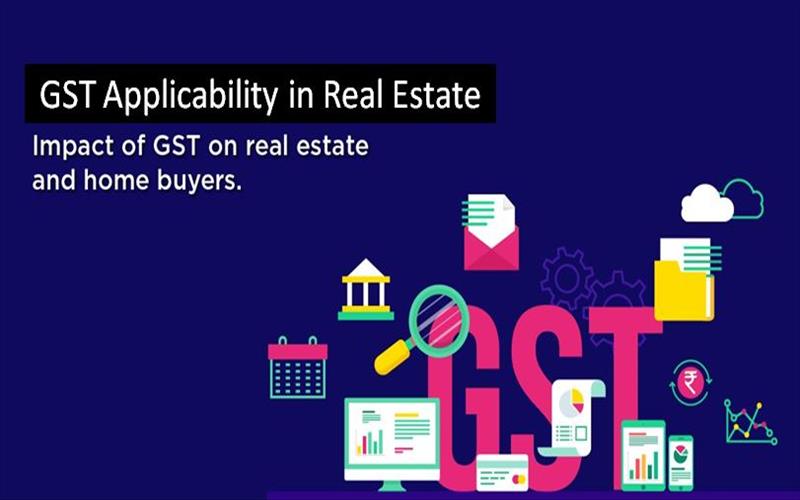
In India, Goods and Services Tax (GST) is applicable when purchasing under-construction properties (flats, apartments, or bungalows) but not on ready-to-move-in properties with a valid Completion Certificate or resale properties. Below is a detailed guide on how and where to pay GST for buying a property in India, based on the latest regulations as of April 27, 2025.
1. Understand GST Applicability on Property Purchase -
Under-Construction Properties:
-Affordable Housing: 1% GST without Input Tax Credit (ITC). Affordable housing is defined as properties with a carpet area up to 60 sq.m in metro cities or 90 sq.m in non-metro cities, and a price cap of ₹45 lakh.
- Non-Affordable/Luxury Housing: 5% GST without ITC. This applies to properties exceeding the affordable housing criteria
- Commercial Properties: 12% GST with ITC.
2. Ready-to-Move-In Properties: No GST is applicable if the property has a valid Completion Certificate or is sold after its first occupation
- Land Purchases : No GST is levied on the purchase of land or developable plots, as per the Central Board of Indirect Taxes and Customs (CBIC) circular dated August 3, 2022
- Additional Costs : GST may apply to specific charges like parking, club membership, or premium features (12%–18%) and maintenance fees (18% if monthly charges exceed ₹7,500 and the housing society’s annual turnover is above ₹20 lakh.
How
to Pay GST :-
- Payment to the Developer:-
- The homebuyer pays the GST directly to the developer or builder as part of the property purchase cost. The GST amount is included in the payment schedule (e.g., installments or lump sum) outlined in the agreement.
- The developer issues an invoice that clearly mentions the GST component (1% for affordable housing or 5% for non-affordable housing) based on the property’s value, excluding the land component.
- For example, if a non-affordable under-construction flat costs ₹1 crore (excluding land value), the GST payable is ₹1 crore × 5% = ₹5 lakh.
- Developer’s Responsibility:-
- The developer is responsible for remitting the collected GST to the Government of India through the GST portal (https://www.gst.gov.in/).
- The developer must be GST-registered and provide their GST Identification Number (GSTIN) on invoices. Buyers can verify the developer’s GSTIN on the GST portal to ensure compliance.
- No Direct Payment by Buyer to Government :-
- Unlike income tax or other direct taxes, buyers do not pay GST directly to the government. The payment is made to the developer, who handles the tax remittance.
-
Where to Pay GST :-
- Through the Developer:-
- GST is paid to the developer via bank transfer, cheque, or other payment methods as per the purchase agreement. The developer’s bank account details are provided in the agreement or invoice.
- Ensure the invoice specifies the GST amount separately and includes the developer’s GSTIN.
- Verification of Payment:-
- After payment, request a receipt from the developer confirming the GST component.
- The developer files GST returns (e.g., GSTR-1 and GSTR-3B) on the GST portal, which buyers can verify using the developer’s GSTIN to ensure the tax has been remitted
- Bank Integration for GST Payments:-
- Some banks, like IndusInd Bank, are integrated with the GST portal, allowing developers to pay GST seamlessly through net banking or at bank branches. However, this is handled by the developer, not the buyer.
-
Steps for Buyers to Ensure Proper GST Payment :-
- Check Property Status:-
- Confirm whether the property is under-construction or ready-to-move-in. Request the Completion Certificate for ready-to-move-in properties to avoid GST.
- Verify GST Rates:-
- Ensure the developer charges the correct GST rate (1% for affordable, 5% for non-affordable, or 12% for commercial). Some developers may incorrectly charge higher rates (e.g., 12% instead of 5% for non-affordable residential properties). If this happens, clarify with the developer or consult a tax professional.
- Review Agreement and Invoices:-
- The sale agreement should mention the GST rate and total tax liability. Invoices must include the GSTIN, property details, and GST amount
- Confirm Developer’s GST Compliance:-
- Verify the developer’s GST registration on the GST portal (https://services.gst.gov.in/services/searchtp).
- Ensure the developer is not opting for old GST rates (12% with ITC) for projects started before April 1, 2019, unless explicitly chosen during the one-time transition window.
- Claim Refund (if applicable) :-
- If the developer has already paid GST for an under-construction flat and you believe you’re eligible for a refund (e.g., due to overpayment), submit a refund application to the GST Council with the flat’s registration details, developer’s GSTIN, and GST payment proof.
- Consult Professionals :-
- Engage a chartered accountant or tax consultant to review GST calculations, especially for luxury or commercial properties, as additional charges (e.g., for premium features) may attract higher GST rates.
-Additional
Considerations:-
- Stamp Duty and Registration Charges :-
- These are separate from GST and are paid to the state government during property registration. GST does not apply to stamp duty or registration fees
- Input Tax Credit (ITC) : -
- Since April 1, 2019, ITC is not available for residential properties (both affordable and non-affordable), so developers cannot pass on ITC benefits to buyers. However, ITC is available for commercial properties
- Reverse Charge Mechanism (RCM) : -
- For certain supplies (e.g., transfer of development rights or inputs from unregistered suppliers), the developer pays GST under RCM, which does not directly affect the buyer transactions.
- Maintenance Charges: -
- If maintenance fees exceed ₹7,500 per month per flat and the housing society’s turnover is above ₹20 lakh annually, 18% GST applies. This is paid to the housing society, which remits it to the government.
Practical Example :-
- Case: You’re buying an under-construction non-affordable flat in Mumbai costing ₹1.5 crore (excluding land value).
- GST Calculation : ₹1.5 crore × 5% = ₹7.5 lakh.
- Payment Process :-
- The developer includes the ₹7.5 lakh GST in the payment schedule (e.g., as part of installments).
- You pay this amount to the developer via bank transfer or cheque, as specified in the invoice.
- The developer remits ₹7.5 lakh to the government through the GST portal.
- Verification : Check the invoice for the GSTIN and GST amount. Verify the developer’s GST filings on the GST portal using their GSTIN.
- Resources for Assistance :-
- GST Portal :- https://www.gst.gov.in/ for verifying GSTIN, checking developer compliance, or understanding GST rules
- Tax Professionals: - Consult a chartered accountant or GST expert for complex transactions, especially for commercial properties or luxury flats
- Developer’s GSTIN :- Obtain from the developer’s invoice or agreement to verify their registration status.
- GST Helpline: - Contact the GST helpdesk at 1800-103-9278 or email helpdesk@gst.gov.in for specific queries.
- Important Notes :-
- No GST on Completed Properties :- To avoid GST, consider ready-to-move-in properties with a valid Completion Certificate
- Transparency :- GST has simplified taxation by replacing multiple taxes (VAT, service tax, etc.), making it easier to understand the tax component
- Stay Updated :- GST rates and rules may change. Check the latest notifications on the GST Council website (https://www.gstcouncil.gov.in/) or consult a tax professional
- Critical Examination: - Always verify the developer’s claims about GST rates and compliance, as some may overcharge or misclassify properties. If in doubt, cross-check with official GST guidelines or a tax expert.
By following these steps, you can ensure proper payment of GST for your property purchase in India while maintaining compliance and transparency. If you need further clarification or assistance with a specific property transaction, please contact with expert Tax Consultant !
Disclaimer
The 85inches Realty clearly disclaims all liability in respect to actions taken or not taken based on any or all the contents of this Blog. The content of this blog is collation of data from various sources and is provided only for information purpose only and 85inches Realty does not canvass the particulars, information, brand or any other materials mentioned in the blogs nor does it obtain any monetary benefit from the same.The 85inches Realty shall in no circumstance be held liable for any expense, loss or damage including, without limitation, direct, indirect or consequential loss or damage, or any other expense, loss or damage whatsoever arising from the use of data, information, interpretation, judgement or opinion arising out of or in connection with the use of this Blog. Reader is advised to read and apply his/ her intellect and discretion in this regards.
Recent Blog




Popular Blog
The Impact of Infrastructure Development on Varanasi Real Estate ?
15/04/2025 | 1997

Why do you need to take home inspection services before buying it ?
15/04/2025 | 1956

How can housing societies tackle non-payment of maintenance charges?
16/06/2025 | 1858