Date : 02/07/2025 |
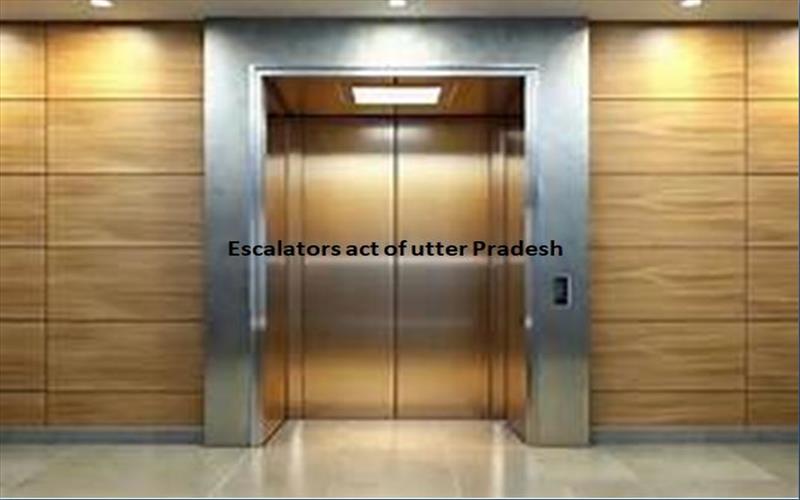
What is the lift or Escalators act of utter Pradesh? It's importance and limitations!
The Uttar Pradesh
Lifts and Escalators Act, 2024, is a legislation passed by the Uttar Pradesh
state assembly on February 10, 2024, aimed at regulating the installation,
operation, maintenance, and safety of lifts and escalators across the state. It
was introduced in response to increasing incidents of lift-related accidents in
urban areas, particularly in high-rise buildings in cities like Noida and
Greater Noida. The Act seeks to enhance public safety by enforcing strict
standards and compliance for vertical transportation systems. However, the
rules for its implementation are still pending notification as of the latest
available information.
Key Provisions of the Act -
1. Mandatory Registration:
- All lift and escalator owners must register their equipment with the Directorate of Electrical Safety within six months of the Act’s implementation. This applies to both new and existing installations in public and private premises, including residential complexes, malls, hotels, hospitals, and office buildings.
- Registration requires an online application with a prescribed fee, and renewals are needed every five years
2. Safety Requirements:
- Installation of Automatic Rescue Devices (ARDs) to move elevators to the nearest floor and open doors during power outages or breakdowns
- Mandatory inclusion of emergency bells, CCTV cameras, adequate lighting, and communication systems in lifts and escalators
- Regular maintenance and inspections are required, with a logbook to record periodic maintenance, which must be displayed near the equipment
- Compliance with Bureau of Indian Standards (BIS) for manufacturing, installation, and operation.
3. Insurance and Compensation:
- Lifts and escalators in public premises must have insurance coverage to protect passengers in case of accidents.
- In case of accidents, immediate reporting to authorities is required, followed by inquiries and provisions for compensation.
4. Penalties for Non-Compliance:
- Non-compliance, such as failure to register or maintain equipment, can result in fines, legal action against owners or manufacturers, and potential closure of establishments.
- An annual testing fee of ₹1,500(It will be variable also) is required, and failure to address defects may lead to FIRs against responsible parties.
5. Accident Management:
- A protocol for addressing accidents, including maintaining an accident logbook to be submitted to electrical safety officers or administration when required.
- Regular emergency drills by lift installation agencies are mandatory.
6. Exemptions:
- Lifts and escalators in industrial areas or premises covered under the Factories Act, 1948, are exempt from this Act;
Importance of the Act
-
1. Public Safety:
- The Act addresses the rising number of lift-related accidents in Uttar Pradesh, such as the tragic incidents in Noida, including a fatal lift collapse in August 2023 and injuries to nine employees in a separate incident. By enforcing safety standards, it aims to reduce risks and prevent fatalities.
- It ensures safer vertical transportation in high-rise buildings, which are increasingly common due to urbanization in cities like Noida and Ghaziabad.
2. Regulation and Accountability:
- The Act establishes clear guidelines for manufacturers, installation agencies, and owners, holding them accountable for safety compliance.
- Registration and regular inspections ensure that only certified agencies handle installation and maintenance, reducing the likelihood of malfunctions.
3. Insurance and Risk Mitigation:
- Mandatory insurance for public premises provides financial protection for passengers in case of accidents, a significant step toward victim support
- ARDs and emergency systems enhance passenger safety during outages or breakdowns.
4. Urban Development Alignment:
- With the proliferation of high-rise buildings and commercial complexes, the Act is timely in addressing the growing demand for safe and reliable vertical transportation systems.
5. Public Confidence:
- By enforcing strict regulations, the Act aims to boost public confidence in using lifts and escalators, contributing to a safer urban environment.
Limitations of the Act -
1. Delayed Implementation:
- Despite being passed in February 2024, the Act’s rules are yet to be notified, delaying its enforcement. This has raised concerns among residents and activists, especially after continued lift accidents in urban areas like Noida.
- The delay means that safety measures are not yet operational, leaving the status quo unchanged in many high-rise buildings.
2. Lack of Penal Provisions:
- Critics have labeled the Act as ‘toothless’ due to the absence of specific penal provisions in the initial draft, which limits its ability to enforce compliance effectively.
- While fines and FIRs are mentioned, the lack of detailed penalty structures may weaken deterrence
3. Implementation Challenges:
- The requirement for online registration and compliance with safety standards may face logistical hurdles, especially for older buildings with outdated lift systems.
- The enforcement by local development bodies and electrical safety officers may be inconsistent due to resource constraints or lack of trained personnel.
4. Limited Scope:
- The Act does not apply to lifts and escalators in industrial areas covered by the Factories Act, 1948, potentially leaving gaps in safety regulation for such premises
- It may not adequately address the retrofitting of older lifts, which could be costly and challenging for owners of existing buildings.
- The Act’s success depends on awareness and compliance among owners and operators, which may be low initially, especially in smaller residential societies or less-regulated areas
- The requirement for residents to file complaints with the Additional District Magistrate (ADM) may deter action due to bureaucratic processes
6. Dependence on External Agencies:
- The Act relies on licensed maintenance companies, but the availability and quality of such agencies in Uttar Pradesh may vary, potentially leading to uneven maintenance standards.
-Inference about it -
The Uttar Pradesh Lifts and Escalators Act, 2024, is a significant step toward improving public safety by regulating the installation, operation, and maintenance of lifts and escalators. Its focus on registration, safety devices, insurance, and accountability addresses critical needs in a rapidly urbanizing state. However, its effectiveness is hampered by delayed implementation, lack of clear penal provisions, and potential logistical challenges. For the Act to achieve its goals, the state government must expedite rule notification, clarify penalties, and ensure robust enforcement mechanisms while raising awareness among stakeholders.
Disclaimer
The 85inches Realty clearly disclaims all liability in respect to actions taken or not taken based on any or all the contents of this Blog. The content of this blog is collation of data from various sources and is provided only for information purpose only and 85inches Realty does not canvass the particulars, information, brand or any other materials mentioned in the blogs nor does it obtain any monetary benefit from the same.The 85inches Realty shall in no circumstance be held liable for any expense, loss or damage including, without limitation, direct, indirect or consequential loss or damage, or any other expense, loss or damage whatsoever arising from the use of data, information, interpretation, judgement or opinion arising out of or in connection with the use of this Blog. Reader is advised to read and apply his/ her intellect and discretion in this regards.
Recent Blog




Popular Blog

The Impact of Infrastructure Development on Varanasi Real Estate ?
15/04/2025 | 1997


Why do you need to take home inspection services before buying it ?
15/04/2025 | 1956
How can housing societies tackle non-payment of maintenance charges?
16/06/2025 | 1858