
Date : 20/10/2026 |
As per Supreme Court and Indian laws Can property registration automatically canceled if documented check is bounced ?
Yes—but not automatically in every case. The legally correct position is more nuanced, A registered sale deed does not become automatically cancelled merely because a cheque given as sale consideration is dishonored not the authority and its process , However if the sale deed itself contains a clear and enforceable condition that the transfer/sale deed will become ineffective or stand cancelled if the cheque is dishonored, courts may enforce that condition depending on the wording of the deed, the parties' intention, possession, payment terms and facts of the case.
A recent 7 August 2025 Allahabad High Court judgment in Vinod Kumar Jalaun v. Kailash Jaiswal is particularly relevant: the sale deed expressly provided that if the cheque was not honoured, the bainama would be treated as cancelled. The court upheld the finding that the sale deed was ineffective after repeated dishonor of the cheque. Importantly, this was an Allahabad High Court decision, not a Supreme Court judgment, The Supreme Court has also recently reiterated the broader principle that the effect of non-payment depends on the intention of the parties as reflected in the sale deed.
Buying or selling immovable property involves substantial
financial transactions, and sale consideration is often paid through bank
transfers, demand drafts or cheques. But what happens when a cheque issued
towards the purchase price of a property is dishonored after the sale deed has
already been executed and registered?
Let’s we Discuss in details…
Does the cheque bounce automatically cancel the property
registration?
The short answer is: No, not in every case.
A bounced cheque does not by itself automatically erase a
registered sale deed from the records. The legal consequences depend upon
the terms of the sale deed, the
intention of the parties, whether payment was a condition precedent to transfer
of ownership, possession, the nature of the transaction and the remedies available
under applicable laws.
Indian courts have repeatedly emphasized that the wording of
the sale deed is extremely important in determining whether ownership actually
passed upon execution and registration or whether the transfer was made
conditional upon payment of the entire consideration.
A recent Allahabad High Court decision dated 7 August 2025 demonstrates why property
buyers and sellers must carefully examine payment clauses before registering a
sale deed.
2. Breach of the payment obligation
3. A contractual condition making the sale conditional
4. Invalidity or ineffectiveness of the transfer
5. Formal cancellation of a registered instrument
These are not necessarily the same thing.
However, this is not an absolute rule, The crucial question
can be the intention of the parties If the sale deed demonstrates that payment
of the agreed consideration was a condition precedent to the passing of title,
non-payment may have a substantially different legal consequence.
In other words:
Ordinary situation - Registered sale deed + payment due
later + no condition making payment essential to transfer May mean that
ownership has passed and the seller may have remedies for recovery of unpaid
consideration.
Conditional situation
ü
Registered sale deed + express clause stating
that title/transaction will become ineffective if the cheque is dishonored and can
produce a different result, subject to judicial determination and the precise
language of the document.
---- Important 2025 Allahabad High Court Decision
on Bounced Cheque----
A particularly
relevant case is: Vinod Kumar Jalaun v.
Kailash Jaiswal on Allahabad High Court – 7 August 2025 and In that case, the
property was agreed to be sold for ₹46 lakh , ₹1 lakh was paid in cash and a
post-dated cheque of ₹45 lakh was issued towards the remaining consideration.
The sale deed contained a specific condition that if the
cheque was not paid, the bainama would
be treated as cancelled, The cheque was subsequently dishonored for
insufficient funds. It was presented again after its date was altered, but it
was again dishonored.
The purchaser argued, among other things, that the sale deed
was already registered and that the seller could pursue recovery of the amount
instead, The court examined the wording of the sale deed and the intention of
the parties and The court upheld the finding that the sale deed had become ineffective
because of the specific contractual condition concerning dishonor of the
cheque.
Why is this case important?
Because it demonstrates that the answer can change
substantially when the registered sale deed itself contains a clear conditional
clause However, it should not be misunderstood as establishing a universal rule
that every bounced cheque automatically cancels every registered property
transaction.
Registration Does Not Mean Every Subsequent Breach Is
Irrelevant, Under the Registration Act, 1908, registration gives important
legal effect to documents concerning immovable property, Section 47 provides
that a registered document operates from the time from which it would have
operated had registration not been required But registration does not
necessarily answer every question regarding the contractual intention of the
parties.
·
Was a cheque merely a mode of payment?
·
Was payment expressly made a condition
precedent?
·
Did the seller intend title to pass immediately?
·
Did possession pass?
·
Does the sale deed contain a
cancellation/conditional clause?
·
Was the clause legally enforceable?
·
Was the cheque issued towards an existing
legally enforceable liability?
·
Did the parties subsequently modify the payment
arrangement?
·
Was there fraud, coercion or misrepresentation?
·
What relief has actually been sought before the
court?
Therefore, registration and payment must be examined
together with the terms of the transaction.
v
What Happens If the Sale Deed Has No
Automatic-Cancellation Clause?
Suppose a sale deed says: “The purchaser has paid ₹50 lakh
and the remaining ₹20 lakh shall be paid within 30 days.” The sale deed is
registered, but the purchaser's cheque for ₹20 lakh bounces that does not
necessarily mean that the sale deed automatically disappears and depending on
the terms and circumstances, the seller may have remedies for the unpaid
consideration, Section 55(4)(b) of the Transfer of Property Act recognizes a
seller's charge over the property in certain circumstances where ownership has
already passed but the purchase money remains unpaid ,Therefore, sellers should
not assume that a cheque bounce automatically returns ownership of the
property.
What happens If the
Sale Deed Specifically Says “Cheque Dishonour = Sale Deed Cancelled”?
This is a much more complicated situation If a registered
sale deed contains a clear provision such as:
“If the cheque issued
towards the sale consideration is dishonored, the transaction shall become
ineffective/cancelled.” the clause can become highly significant and The court
may examine whether the clause establishes that - payment was a condition
precedent or condition governing the effectiveness of the transfer.
The Allahabad High Court's 2025 decision illustrates this
situation. The court found that the specific contractual condition, combined
with the surrounding facts, supported the conclusion that the sale deed had
become ineffective after the cheque was dishonoured , However, parties should
still avoid interpreting such a clause as permission for unilateral
administrative cancellation of the registered document.
 Can the Sub-Registrar Automatically Cancel the
Registered Sale Deed?
Generally, a Sub-Registrar cannot simply erase or cancel
an already registered sale deed because one party subsequently claims that the
consideration was not paid and The Supreme Court has recognized the limits of
registration authorities once registration has been completed.
In Satya Pal Anand v. State of
Madhya Pradesh , the Supreme Court considered the role of the registering
authority after registration. The legal position is that the registration
machinery is not ordinarily a substitute for a civil court adjudicating
substantive title disputes.
A later judicial decision also
summarizes the principle that a registered sale deed generally cannot be
unilaterally cancelled by the executant through a cancellation deed, while an
appropriate civil court can grant cancellation under Section 31 of the Specific
Relief Act where the statutory requirements are satisfied.
What About a Cheque Bounce Case
Under Section 138 ?
A bounced cheque may also create a
separate legal issue under Section 138
of the Negotiable Instruments Act, 1881 , provided the statutory requirements
are satisfied.
The cheque-bounce proceedings and
the property dispute are not necessarily mutually exclusive and The Supreme
Court has recognized that proceedings under the Negotiable Instruments Act can
coexist with appropriate civil remedies where the facts justify separate causes
of action.
Therefore, a seller facing a
dishonoured cheque may potentially have:
·
a remedy concerning unpaid sale consideration.
·
a civil remedy concerning the property transaction.
·
a claim for cancellation/declaration where
legally maintainable and a cheque-bounce remedy under Section 138, subject to
statutory requirements.
The availability and combination of
remedies depends on the facts and applicable limitation periods.
Supreme Court Principle: Intention of the
Parties Matters One of the most
important principles for property buyers and sellers is that the court may
examine the intention of the parties, The Supreme Court has explained that
although registration is normally strong evidence of an intention to transfer
ownership, it is not necessarily conclusive where the transaction expressly
makes payment a condition precedent to the passing of title, Consequently,
property documents should not merely state the amount of consideration.
They should clearly explain:
·
how much has been paid ?
·
how much remains payable?
·
when the balance is payable?
·
the mode of payment?
·
whether a cheque is being accepted as
conditional payment?
·
whether title passes immediately?
·
whether possession is being delivered?
·
what happens if the cheque is dishonoured; and what
legal consequences follow from non-payment.
A Crucial Difference:
“Sale Deed Cancelled” vs “Sale Deed Ineffective”
Property owners often use these expressions interchangeably,
but legally they may have different implications.
Cancellation:-
A court may formally order cancellation of an instrument
under applicable law, including Section 31 of the Specific Relief Act where its
requirements are met and If the instrument has been registered, Section 31(2)
contemplates communication of the decree to the registration office so that the
cancellation can be noted in the records.
Ineffectiveness:-
A court may instead determine that, because of the terms and
circumstances of the transaction, the document does not operate to transfer the
intended rights in the manner claimed.
The distinction can be extremely important in litigation.
The 2025 Allahabad High Court decision is a useful example
because the trial court found the sale deed ineffective while the formal relief
of cancellation was not granted because the required court fee had not been
paid.
Why Property Buyers Must Read the Payment Clause Carefully
:-
A common mistake in real estate transactions is treating a
sale deed as a standard form and focusing only on: Property description + sale
price + signatures + registration but The payment clause can be equally
important, For example, these two clauses can have very different legal
implications:
Clause A – Payment obligations -“Balance consideration of ₹20
lakh shall be paid within 30 days.”
Clause B – Conditional transfer:-
“Ownership shall become effective only upon realization of
the balance consideration, and in the event of dishonour of the cheque, the
transaction shall become ineffective.”
The second clause creates a much stronger argument that
payment was intended to be a condition governing the transfer and The actual
legal effect will still depend on the complete deed and surrounding
circumstances.
What Sellers Should Do Before Accepting a Post-Dated Cheque
and Property sellers should take special care when accepting post-dated
cheques.
Recommended precautions:-
1. Clearly identify the cheque- Mention cheque number, bank,
amount and date.
2. Clearly state whether the cheque represents payment
The deed should accurately describe whether the cheque is
consideration, advance, security or another form of payment.
3. Define the consequence of dishonor - If the parties
intend payment to be a condition of the transaction, the deed should state that
intention clearly.
4. Address possession - The document should clearly state
when possession is to be delivered.
5. Avoid contradictory clauses - A deed should not
simultaneously state that full consideration has been received and that the
entire consideration remains conditional upon future cheque realization without
carefully explaining the legal arrangement.
6. Take independent legal advice - High-value property
transactions should be reviewed by a property lawyer before registration.
Ø
What Buyers Should Do Before Signing a Sale Deed
-
Buyers should also be aware and must be verify the following
documents:
v
title documents;
v
Encumbrances;
v
previous sale deeds;
v
mutation records;
v
land-use status;
v
approvals;
v
litigation;
v
identity of seller;
v
authority of the seller;
v
consideration payment terms;
v
bank transaction details;
v
cheque clauses;
v
possession provisions;
v
indemnity clauses;
v
default clauses; and
v
dispute-resolution provisions.
A buyer should never assume: “Once registered, everything is
irreversible.”
Nor should a seller assume: “If the cheque bounces, the
property automatically comes back to me.”
Both assumptions can be legally dangerous.
Does Cheque Bounce
Automatically Reverse Mutation? Not necessarily.
In a 2025 Supreme Court matter involving registered sale
deeds, allegations included conditional sale terms and bounced cheques. The
Supreme Court did not simply declare the property registration automatically cancelled.
Instead, considering the pending civil suits and interim orders, it directed
revenue authorities to record the pendency of the suits and the restrictions on
creating third-party rights in the mutation records.
This is an important distinction:
Cheque dishonour → dispute → court proceedings - does not
necessarily mean:
Cheque dishonour → automatic cancellation by
Sub-Registrar/revenue authority.
Practical Example
Suppose Mr. A sells land to Mr. B for ₹1 crore. And ₹20 lakh
is paid through bank transfer.
₹80 lakh is paid through a post-dated cheque.
Situation 1: No
conditional clause
The sale deed is registered and simply states that ₹80 lakh
is payable later.
The cheque bounces, The sale may not automatically become
void. Mr. A may have remedies for recovery of the unpaid amount and other
legally available remedies.
Situation 2: Strong conditional clause, The registered deed
clearly states that the ₹80 lakh cheque
is part of the sale consideration , realization of the cheque is a condition
governing the transfer and dishonor makes
the transaction ineffective, The court may examine and enforce that contractual
arrangement, depending on the facts.
Situation 3: Fraud or fabricated payment instrument -
If a fake cheque, fraudulent document or fraudulent
representation was used to induce execution of the deed, the legal consequences
can be substantially different and may involve civil and criminal proceedings.
-
Key Legal
Takeaways
Myth: A bounced
cheque automatically cancels every registered sale deed.
Reality: There is no universal automatic-cancellation rule
Myth: Once a sale deed is registered, non-payment can never
affect the transaction.
Reality: The effect of non-payment can depend on the **terms
of the deed and intention of the parties
Myth: The Sub-Registrar can simply cancel a registered sale
deed after a cheque bounce.
Reality: Substantive cancellation of a registered instrument
generally requires the appropriate legal process; registration authorities
cannot ordinarily adjudicate complex title disputes merely because payment has
failed.
Most important Instructions -
Always read the consideration and default clauses before
registering a property transaction.
frequently Asked
Questions relating to cheque bounce disputes -
Ans. A cheque bounce by itself does not create a universal
automatic cancellation of a registered sale deed.
Q. Can a sale deed contain a clause providing for
cancellation upon cheque dishonour?
Ans. Yes, parties may structure contractual conditions, but
the enforceability and legal effect depend on the exact wording and
circumstances of the transaction.
Q. Can the Sub-Registrar cancel the registered sale deed?
Ans. A Sub-Registrar generally cannot unilaterally
adjudicate substantive ownership disputes and cancel a registered conveyance
merely because consideration was allegedly not paid.
Q. Can the seller file a cheque-bounce case?
Ans. potentially yes, where the requirements of Section 138
of the Negotiable Instruments Act are satisfied.
Q. Can the seller approach a civil court?
Ans. Yes, depending on the facts, the seller may have civil
remedies relating to unpaid consideration, declaration, cancellation,
possession or other appropriate relief.
Q. Is registration alone conclusive proof that
ownership has passed?
Ans. Registration is highly significant, but the Supreme
Court has recognized that the intention reflected in the transaction can matter
where payment was made a condition precedent to the passing of title.
85inches Realty Pvt Ltd –( Property Solutions A to Z)
For buyers, sellers, investors and property owners, document
verification before registration is often more important than dealing with a
dispute after registration, Before purchasing or selling property, have the
title documents, sale agreement, payment structure, encumbrances and
registration documents professionally reviewed.
85inches Realty Pvt Ltd
(Property Solutions A to Z)
www.85inches.com
helpdesk@85inches.com
Disclaimer
The 85inches Realty clearly disclaims all liability in respect to actions taken or not taken based on any or all the contents of this Blog. The content of this blog is collation of data from various sources and is provided only for information purpose only and 85inches Realty does not canvass the particulars, information, brand or any other materials mentioned in the blogs nor does it obtain any monetary benefit from the same.The 85inches Realty shall in no circumstance be held liable for any expense, loss or damage including, without limitation, direct, indirect or consequential loss or damage, or any other expense, loss or damage whatsoever arising from the use of data, information, interpretation, judgement or opinion arising out of or in connection with the use of this Blog. Reader is advised to read and apply his/ her intellect and discretion in this regards.




Popular Blog
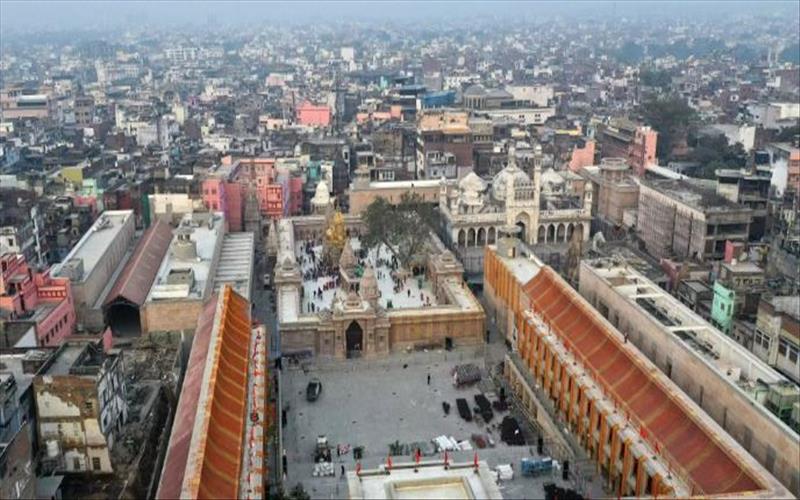
The Impact of Infrastructure Development on Varanasi Real Estate ?
15/04/2025 | 2091



Why do you need to take home inspection services before buying it ?
15/04/2025 | 2048
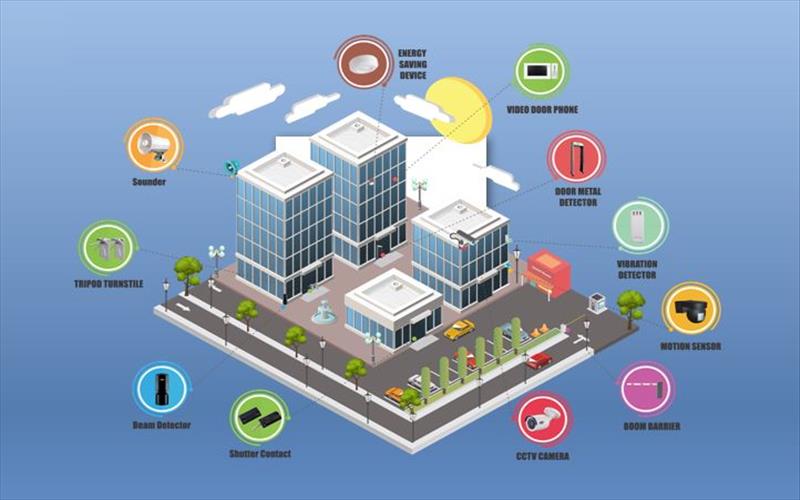
How can housing societies tackle non-payment of maintenance charges?
16/06/2025 | 1975